AO Spine North America Early Career Mentorship Program

Overview

The Early Career Mentorship program connects surgeons entering their first years of practice with a network of mentors and other young surgeons. The intention is to ease the transition from formal training to independent clinical practice.

Mentors provide a sounding board and help mentees navigate professional pathways. By creating opportunities to exchange experiences and provide guidance, this program embodies the AO culture of camaraderie and dedication to sharing knowledge across career stages.


Who is eligible to participate?

Eligible Mentees – AO Spine NA Fellows are eligible to participate as mentees at the conclusion of their fellowship year. AO Staff will reach out via email with information about declaring interest and details on participating.

Eligible Mentors – Mentors are invited to participate by the AO Spine Community Development Committee. Each mentor has a minimum of 2 years in practice.


What is the time commitment involved?

Mentors and mentees meet quarterly, with up to 4 meetings over the one-year program. Meetings run 60 min. The mentorship year begins in fall, after the AO Fellowship year ends.


What is the process for setting up the quarterly mentor/mentee meetings?

Meetings are coordinated by AO Staff. Emails are sent quarterly to gather mentor availability and share available time slots with mentees.


What is the format of the mentor/mentee meetings?

Meetings are held virtually, once a quarter. The meetings are open to one mentor and groups of up to 4 mentees.

These meetings are an opportunity to discuss any topics the group would like to cover (i.e. reviewing cases, discussing board prep, strategizing about practice growth or academic goals). While mentors may propose a topic to help guide the discussion, mentees can introduce topics/personal concerns as needed during the session. Open discussion is also encouraged.


Questions? Contact Kaitlynd O’Doherty, AO Spine NA Community Development Liason, at [email protected].


Current Mentors

(subject to change)
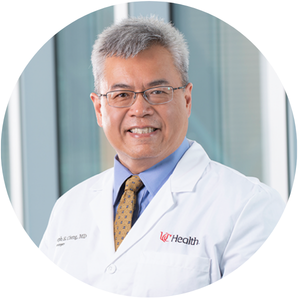
Joseph Cheng, MD, PhD

Professor and Chair, Department of Neurosurgery
University of Cincinnati College of Medicine
Director of the Neurosurgery Spine Fellowship Program,
University of Cincinnati College of Medicine
Associate Director, UC Gardner Neuroscience Institute

Dr. Cheng completed his Neurosurgical residency training followed by a fellowship in complex spinal surgery at the Medical College of Wisconsin, in addition to a master’s degree in biomedical engineering at Marquette University in Spinal Biomechanics. His research interests include healthcare policy, outcomes science, spinal biomechanics, spinal deformity, and minimally invasive spinal techniques.

Dr. Cheng is a respected educator and has received a number of awards including being named as a ACS/AANS Health Policy Scholar and receiving the AANS Distinguished Service Award.  He is a fellow of the American Association of Neurological Surgeons (AANS) and American College of Surgeons and has been a leader in many other professional organizations including the American Medical Association, AO Foundation, Congress of Neurological Surgeons, and North American Spine Society.  He is currently the Treasurer for American Association of Neurological Surgeons and Chair of the Ohio Neurosurgical Society, along with past-President of the Academy of Medicine of Cincinnati, past-Chair of the Council of State Neurosurgical Societies, and past-Chair for the AANS/CNS Section on Disorders of the Spine and Peripheral Nerves.  He has been a CPT Advisor for AANS along with being past-Chair of the AANS/CNS Coding and Reimbursement Committee and currently sits on the AMA CPT Editorial Board.

Dr. Cheng is currently the Frank H. Mayfield Professor and Chair of the Department of Neurosurgery in addition to being the Director of the Neurosurgery Spine Fellowship Program at the University of Cincinnati College of Medicine, and the Associate Director for the UC Gardner Neuroscience Institute.

Matthew Goodwin, MD, PhD

Assistant Professor, Orthopaedic Surgery and Neurological Surgery
Division of Spine Surgery
Director, Spinal Oncology
Washington University

Matthew L. Goodwin, MD, PhD is the Director of Spinal Oncology and Attending Spine Surgeon/ Assistant Professor at Washington University in St Louis, MO, USA. There he also runs a basic science lab studying tumor metabolism and intervertebral disc degeneration.  He holds positions within the department of Orthopedic Surgery and within the Division of Biology and Biomedical Sciences (DBBS) at Washington University, where he serves as faculty within Cancer Biology, Molecular Cell Biology, and Molecular Genetics and Genomics.

Dr. Goodwin was originally born and raised in Greenville, SC to parents who emphasized academics and athletics.  As a high school upperclassman, he spent half the day at public school and the other half at the Fine Arts Center, where he had been accepted to develop his skills in the visual arts. He went on to earn a D1 scholarship running cross country and track at Furman University in South Carolina. There he spent countless hours between practices and classes in the Human Performance Lab, testing athletes and beginning his love for science and discovery. He went on to complete his Master’s degree in Education at Furman, specializing in human behavior and disorders. He then earned his PhD with L.B. Gladden at Auburn University, studying the role of lactate in muscle metabolism. While developing his expertise in this area he became fascinated with tumor metabolism and lactate’s role in tumor metabolism, particularly as his mother was diagnosed with a blood/bone marrow cancer. This led him to Cornell in New York City for medical school, where he continued his work on metabolism and tumors of the musculoskeletal system.

During his last year of medical school his father was diagnosed with (and died one year later) pancreatic cancer, only fueling his desire to maintain investigative work focusing on cancer throughout his career (Goodwin ML.  JAMA. 2017;318(20):1977-78). Discussions of integrating basic science lab work alongside his surgical training ultimately led him to accept a position at the University of Utah for his Orthopedic Surgery residency. There he worked with Drs. Kevin B. Jones and Mario Capecchi (2007 Nobel Prize in Physiology or Medicine) investigating the role of lactate in the tumor microenvironment in a novel transgenic sarcoma mouse model. This work culminated with a first author Cancer Cell publication and being awarded the Connective Tissue Oncology Society (CTOS) Young Investigator Award (Goodwin ML. et al., Cancer Cell. 2014;26(6):851-862).

Given his interest in tumors (both operating on them and studying them in the lab), Dr. Goodwin then spent a year at Johns Hopkins in the prestigious Neurosurgery department, completing a specialized fellowship operating on spinal tumors with Dr. Dan Sciubba. Due in part to their reputation as leaders in Orthopedic Oncology (in the lab and in the operating room), he then joined the department of Orthopedic Surgery at Washington University in 2019, where his surgical practice focuses on spinal tumors, and his basic science lab investigates tumor metabolism as well as degeneration of the intervertebral disc.  In his first year of practice, he was awarded the Faculty Development Award (with a multi-year grant to study osteosarcoma in his lab).

He was also named one of the top 40 surgeons under 40 by the North American Spine Society (NASS). Combining a busy surgical practice with his laboratory studies, he has emerged as a world leader in the treatment of spinal tumors.  He has active roles in the NASS Spinal Oncology section, the AO Spine Knowledge Forum – Tumor, and numerous other societies (e.g. Goodwin ML et al. 2025. Global Spine Journal;0(0)). He regularly moderates and speaks at national and international conferences on both the clinical treatment of spinal tumors and the ongoing studies in his laboratory (including at Global Spine Congress, Spine Summit, NASS Annual Conference, and the online Virtual Global Spine Conference).

Eric Klineberg, MD, MS

Chair, AO Spine North America
Vice Chair, UTHealth Houston Orthopaedics
Chief Ortho Spine Surgery, UTHealth Houston

Dr. Klineberg is a professor and vice chair in the Department of Orthopedic Surgery at McGovern Medical School at UTHealth Houston. He serves as chief of orthopedic spine surgery and is the Milton “Chip” Routt Endowed Chair of Spinal Surgery.

World-renowned in his field, Klineberg was a professor and vice chair of the Department of Orthopedics at the University of California, Davis (UC Davis), for 16 years. He was also the chief of the spine service and co-director of the spine center. Klineberg clinically cared for complex adult spinal deformity patients at UC Davis and complex pediatric patients at Shriners Hospital for Northern California and was recognized for his clinical excellence.

Klineberg has more than 300 publications and 20 book chapters, and is the book editor for “Adult Lumbar Scoliosis, A Clinical Guide to Diagnosis and Management.” He has developed a national and international reputation in spinal deformity surgery through research, teaching, and clinical activity. Klineberg serves on the executive committee of the International Spine Study Group and collaborates with researchers around the globe. He is a principal or co-principal investigator for over half a dozen clinical studies and has received numerous medical and educational grants.

Nationally, Klineberg serves on the board of directors of the Scoliosis Research Society and co-chaired the 31st International Meeting on Advanced Spine Techniques. He is also a member of AO Spine, where he previously served as chair of the AOSNA spine fellowship committee and currently chairs AO Spine North America.

Klineberg received his undergraduate degree from Rice University and his master’s at the University of Maryland, followed by his medical degree from the University of Maryland School of Medicine, Baltimore. He completed his residency at the University of Washington in Seattle and fellowship training in spinal surgery at the Cleveland Clinic Foundation in Ohio.

Emmanuel Menga, MD

Professor of Orthopaedic Surgery and Vice Chair of Education
Residency Program Director, Orthopaedic Surgery
Associate Fellowship Program Director, Spine Surgery
Miller School of Medicine, University of Miami

Dr. Menga is a board-certified orthopaedic surgeon specializing in minimally invasive spinal surgery and complex spinal surgery/scoliosis. With extensive experience in managing degenerative disc disease, degenerative spine conditions, disc herniation, and stenosis of the cervical, thoracic, and lumbar spine, Dr. Menga offers both nonoperative and operative treatments for cervical, thoracic, and lumbar pain and radiculopathy/sciatica. Additionally, Dr. Menga manages traumatic spine disorders and a wide range of spinal pathologies using techniques ranging from minimally invasive spine surgery to complex spinal reconstruction.

Dr. Menga is a Professor of Orthopaedic Surgery. He recently joined from the University of Rochester in New York, where he served as the Division Chief of Spine Surgery and as Associate Professor of Orthopaedics and Neurosurgery. Currently, he serves as the Vice Chair of Education and the Orthopaedic Surgery Residency Program Director for the Orthopaedic Surgery residency training program at the University of Miami. He also serves as the Associate Fellowship Program Director of Spine Surgery.

A veteran of the United States Navy, Dr. Menga served as a Petty Officer with the Amphibious Construction Battalion Unit. He earned his medical degree at the University of Rochester School of Medicine and Dentistry and completed his residency training in Orthopaedic surgery at the Johns Hopkins Hospital. At Johns Hopkins, he was awarded the prestigious Frank L. Coulson, Jr. Award for Clinical Excellence by The Miller-Coulson Academy of Clinical Excellence (MCACE) as a Chief Resident. He then completed his fellowship training in Orthopaedic spinal and deformity surgery at NYU Langone Medical Center and the Hospital for Joint Diseases in a combined Orthopaedic and Neurosurgery training program.

Dr. Menga has also gained additional experience by traveling to and visiting world-renowned spine surgeons to share his expertise in spinal deformity and
reconstruction. He recently visited the Nanjing Drum Tower Hospital in Nanjing, China, and the Department of Orthopaedic and Traumatology at Bordeaux University Hospital in Bordeaux, France.

In recognition of his contributions, Dr. Menga was recently awarded the prestigious Edgar Dawson Travelling Fellowship by the Scoliosis Research Society (SRS), allowing him to visit other deformity spine surgeons to expand and share his knowledge in North America.

In 2018, Dr. Menga was honored by the North American Spine Society (NASS) as one of the top 20 spine surgeons in North America under age 40, an accolade from Spine Line’s inaugural “20 under age 40” list.

Jason Savage, MD

Director, Spine Surgery Fellowship Program and Adult Spinal Deformity program Cleveland Clinic

Dr. Jason Savage is an orthopaedic spine surgeon based in Cleveland, Ohio. Dr. Savage received his medical degree from UMDNJ – Robert Wood Johnson Medical School in 2006. Following his medical degree, he completed a general surgery internship at Northwestern Memorial Hospital and then his orthopaedic surgery residency at Northwestern University. Subsequently, he completed additional surgical training through a fellowship in spine surgery at the University of Wisconsin.

He is currently the Spine Surgery Fellowship Program Director and runs the Adult Spinal Deformity program as well.  Dr. Savage is passionate about resident/fellow education and mentorship.

Jeremy Shaw, MD

Professor and Medical Director, Research for Intermountain Neurosciences
Adjunct Professor, University of Utah

Dr. Jeremy D. Shaw is a specialist in cervical, thoracic, and lumbar spine surgery.

Dr. Shaw graduated from Middlebury College, and obtained both an MD and MS concurrently at Case Western Reserve University School of Medicine after which he completed his residency in Orthopaedic Surgery at the University of California, San Francisco (UCSF). He then obtained further subspecialty training in complex spine surgery at the University of Utah.

Dr. Shaw performs spine surgery using minimally invasive (MIS) techniques when possible and uses the latest surgical technologies including motion preservation, disc replacement, and microsurgery which can reduce the need for spinal fusion. Spine surgery is Dr. Shaw’s passion and he has received numerous awards for his patient care and appears on lists of top doctors.

Dr. Shaw is Professor and Medical Director of Research for Intermountain Neurosciences. He holds an adjunct professorship at the University of Utah. Dr. Shaw previously served as Associate Professor in the Department of Orthopaedic Surgery at the University of Pittsburgh. While at the University of Pittsburgh, Dr. Shaw served as Director of the AOSpine Spine Fellowship, Spine Education, Clinical Research the Pittsburgh Orthopaedic Spine Research (POSR) Group in the Bethel Musculoskeletal Research Center.

Dr. Shaw and his team are focused on spine surgery and patient outcomes. Dr. Shaw has research interests in spine biomechanics and biofilm biology. Dr. Shaw has received numerous grant and research awards. He has published extensively, including numerous peer reviewed articles and presentations.  Dr. Shaw serves on committees for the Lumbar Spine Research Society, Cervical Spine Research Society and Musculoskeletal Infection Society. He is AO Spine Faculty and has received funding from AO Spine, CSRS, LSRS, OREF, NIH, DoD and other foundations to support his research.

Ryan Spiker, MD

Professor and Fellowship Program Director,
Department of Orthopaedic Surgery,
University of Utah

Dr. Spiker treats conditions of the neck and back such as disk herniations, spinal stenosis, cervical myelopathy and deformities of the spine. He believes in the thoughtful use of new technologies, including minimally invasive surgery and image-guided techniques. As a Professor in the Department of Orthopaedic Surgery at the University of Utah, he enjoys the benefits of working closely with non operative spine specialists and physical therapists to provide comprehensive care to his patients.

Dr. Spiker’s research interests include the treatment of cervical spine disorders, spine imaging techniques and the genetics of common spinal conditions. He has authored many peer-reviewed publications and book chapters on these and other related topics.

Dr. Spiker studied Biochemistry and History and The University of California at Santa Barbara and earned his medical degree from the University of Southern California. He completed his residency in Orthopaedic Surgery at the University of Utah and a dual Orthopaedic Spine and Neurosurgical Spine Fellowship at the Rothman Institute at Jefferson Medical Center in Philadelphia, PA.

Elizabeth Yu, MD

Professor, Department of Orthopaedics, Division of Spine
Chief, Division of Spine Surgery
The Ohio State University Wexner Medical Center

Dr. Yu is an orthopedic spine surgeon at The Ohio State University Wexner Medical Center. She specializes in the treatment of spinal disease and disorders using minimally invasive techniques. Some of my clinical interests include spinal stenosis, herniated discs, degenerative disc disease and degenerative scoliosis.

Dr. Yu has published several articles in peer reviewed orthopedic and spine journals. She is the author of several book chapters and has presented research in both regional and national conferences. Accolades include a Howard Hughes Research Grant awarded by Stanford University, election to Alpha Omega Alpha National Honor Medical Society, recipient of Cum Laude MD degree, best resident paper (coauthored) awarded by the Minnesota Orthopedic Society, citation in Becker’s Spine Review as “Female Spine Surgeon Leaders to Know” in 2016, and citation ranking in the top 10 percent of patient satisfaction at The Ohio State University Wexner Medical Center. Dr. Yu has also received several grants to support research.

Within the AO NA Spine community, Dr. Yu has served as faculty and co-chair for the resident and fellows spine teaching courses since 2019, as well as serving as a moderator for the Case Consult series. Dr. Elizabeth Yu is the current AO Spine North America (AO SNA) Community Development Chair.