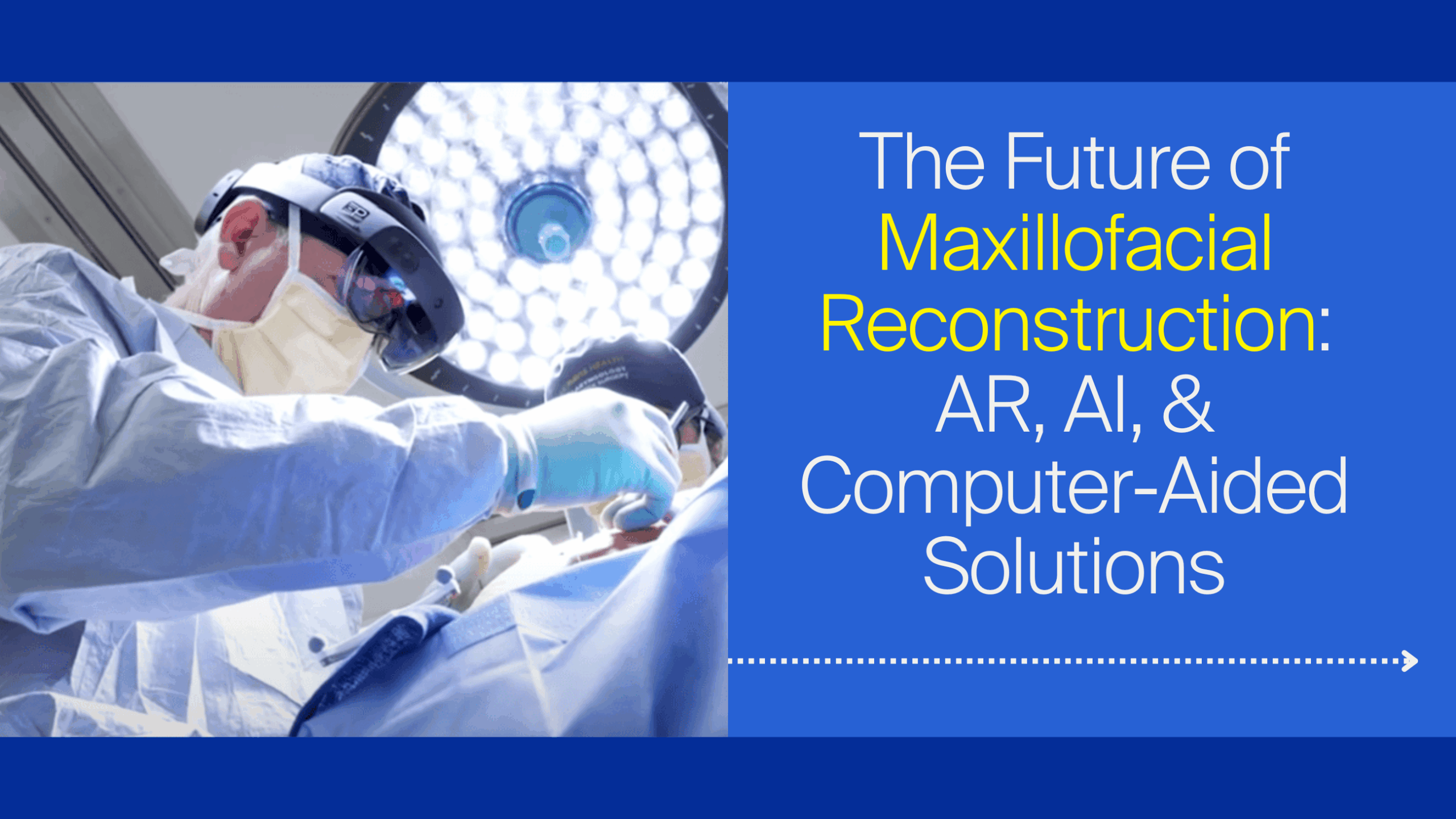
Step into the future of maxillofacial reconstruction with the AO CMF NA course, The Future of Maxillofacial Reconstruction: Augmented Reality, Artificial Intelligence, & Computer-Aided Solutions. Designed to equip surgeons with the skills necessary to navigate the evolving landscape of complex facial reconstruction, this course explores how groundbreaking technologies are not only enhancing surgical outcomes but also fundamentally transforming the approach to patient care.
Computer-Aided Solutions, AR and AI Maxillofacial Reconstruction Course
This intensive, two-day course, held from May 1 to 3, 2026, in Tampa, FL, is a leading educational experience for craniomaxillofacial (CMF) surgeons. It focuses exclusively on integrating digital technologies into complex reconstructive procedures. Participants will move beyond theory and engage in practical, hands-on, cadaver-based dissections that demonstrate the real-world application of the most current computer-aided surgical solutions.
The course provides comprehensive coverage of the entire digital workflow, including virtual surgical planning for preoperative design, utilization of 3D-printed models/guides/implants, application of augmented reality for real-time surgical navigation, and intra-operative CT and optical navigation for intraoperative verification. Learners can expect to gain an understanding of how artificial intelligence is reshaping diagnostic and treatment strategies, empowering surgeons to achieve unprecedented levels of accuracy and efficiency. An emerging technology session will provide hands-on experience with multiple virtual and augmented reality goggles for pre-surgical planning, surgical execution, and resident and patient education. Prepare to integrate these powerful tools into your practice.
A Personal Invitation from Dr. Bradley Strong, MD, Chairperson
Why Should You Attend? Dan Hammer, DDS, FACS, Co-Chairperson
Who Should Attend?
This program is specifically tailored for:
- Residents and Fellows in oral and maxillofacial surgery, ENT, and plastic surgery (PGY3 and up)
- Practicing surgeons in both academic and private practice settings
- Any surgeons looking to deepen their expertise in virtual surgical planning, patient-specific implant fabrication and placement, traditional and AR navigation, pre-prosthetics, and intraoperative imaging
Whether you are in the early stages of your training or are a seasoned expert, this course provides valuable insights and practical skills to elevate your surgical capabilities.
Key Course Features: Bridging Technology and Practice
The course curriculum offers an in-depth study of digital innovation in surgery, combining expert-led discussions with hands-on practice to provide a comprehensive learning experience.
World-renowned experts will deliver lectures on topics including congenital, post-traumatic, and post-oncologic reconstruction, using cutting-edge applications like AI, augmented and virtual reality, pre-prosthetic subperiosteal implants, intra-operative imaging, and navigation.
Following the lectures, participants will complete three surgical modules in the cadaver lab:
- Post-traumatic orbito-zygomatic reconstruction using patient-specific implants, traditional navigation, and intra-operative CT.
- Fibula free flap mandibular reconstruction with surgical cutting guides, patient specific implants, and single-stage dental restoration.
- Augmented reality virtual fibula cutting guides, zygoma reduction, and frontal sinusotomy.
An emerging technology session will provide hands-on experience with multiple virtual and augmented reality goggles for pre-surgical planning, surgical execution, and resident and patient education.
Hands-On Cadaver Lab
This is a core component of the course in which you will apply the techniques learned in the didactic sessions. Under the guidance of expert faculty, you will perform reconstructions using 3D-printed guides, patient-specific hardware, and intraoperative navigation systems, including augmented reality. This practical experience is crucial for building confidence and translating new skills into your own operating room.
Why This AI Maxillofacial Reconstruction Course is Essential
The field of CMF surgery is undergoing a rapid technological transformation. Proficiency in digital tools is quickly becoming a standard of care. By attending this course, you are investing in your ability to provide the best possible outcomes for your patients.
- Improve surgical accuracy and predictability.
- Reduce operative time and potential complications.
- Manage complex post-traumatic and oncologic defects with greater confidence.
- Integrate a digital workflow into your practice.
Meet the Course Faculty
Our team of esteemed faculty members brings a wealth of knowledge and experience to this course. Each instructor is a recognized leader in their respective field, ensuring that you receive cutting-edge insights and expertise.
Space is limited to ensure a high-quality, interactive learning environment and an exceptional faculty-to-participant ratio. Register today to confirm your participation in this essential maxillofacial reconstruction course and lead the charge into the future of surgery.